Friday, April 23, 2010

Howard Galganov- The Empire Strikes Back!

There's little doubt that if an evil Anglophone Empire seeking to assimilate and enslave Francophone Canadians actually exists, Howard Galganov would be the movement's Darth Vader.

Invoking his very name sends shudders down the spine of ardent Quebec nationalists and his unabashed and cruel attacks on Quebec and French language nationalism elicits waves of fear and hatred among his enemies.

Now that Mordechai Richler has passed, Galganov has assumed the title of the most hated Anglophone by French language nationalists and may outrank Lord Durham and General Amherst as the ultimate, all-time Anglophone rogue.

For those of you unfamiliar with Howard, he is the uber English activist who battled all forms of restrictions placed on English rights in Quebec. His mantra was so caustic and extreme that the majority of English members of the media and intelligentsia distanced themselves from him, lest they too, be perceived to be as virulently anti-French. Anglo voters have rejected him massively at the polls in both Ontario and Quebec when Galganov has run for office, perhaps underlining that Anglos are not the rednecks made out to be by the nationalists.

After years of fighting a losing battle and after countless death threats, he finally packed it in and moved out of Quebec to Eastern Ontario about ten years ago.

Today, Mr Galganov continues to militate for English language rights as well as conservative causes through his website.

His most recent undertaking, the production and distribution of an inflammatory pamphlet has sent French language militants flying into a fit of rage and may be just about the nastiest stunt he has ever pulled.

The issue concerns the small township of Russel in eastern Ontario that has a large population of Franco-Ontarians. The town passed a bylaw making bilingual signage compulsory, to which Galganov is deeply opposed.

His rationale for opposing the bylaw is that it violates the concept of free speech and the precept that people should be free to erect signs in the language of their choice, be it English, French or Swahili. LINK

His fight over the issue with Mayor Ken Hill has degenerated into a legal battle that is spiralling out of control, with neither the mayor nor Mr. Galganov willing to give an inch.


A resident wrote an open letter addressing Mr. Galganov, to a local newspaper- La Nouvelle;
"Discussing your pamphlet with friends, we came to the conclusion that one of the problems is due to the fact that Mr. Hill and you have, unfortunately, a lot in common. Both of you want to win at all costs without consideration of the incurring expenses that residents of Russell will bear, because of your stubbornness."  Link
Now the pamphlet itself is truly a clever work of art. If Mr. Galganov tried harder to inflame emotions, he couldn't have done a better job. Using his experience in the advertising business, he created a cover page that was sure to evoke the strongest of reaction.

He mischievously gives the impression that the pamphlet is a recipe book for the destruction of the culture of Franco Ontarians, but a closer look at the fine print placed between the much larger first and third phrase changes the meaning completely.

There's no doubt that his intention was to enrage French language militants and he has succeeded beyond his wildest dreams.

The pamphlet posits that bilingualism is the first step to French assimilation and thus Francophones should also rally against the bilingual sign bylaw.

Where have we heard this argument before?

In Quebec, of course.
Mr. Galganov has cleverly borrowed an argument, right out of the handbook of French language zealots, who also advance the notion that  bilingual signs in Quebec are a force of assimilation.
Ironically, when the battleground shifts to Ontario,  these same militants argue in favour of bilingual signs because in Ontario, it is a force for the preservation of the French language.
No contradiction there, I guess?

At any rate the pamphlet had it's desired effect, with one of Quebec's leading language militants, Gilles Rhéaume of the La ligue québécoise contre la francophobie canadienne (Quebec league against Canadian Francophopia) planning to complain to no less an august body than the United Nations Human Rights Council (UNHRC)  Link

It is perhaps understandable that Francophones  remain touchy, Mr Galganov appears to have gone well over the edge these last two years, starting with the odious campaign to boycott French-owned stores. That campaign also got to Mr. Rhéaume and he also filed a complaint to the United Nations, but so far, received no response.

Its a bit sad to see Mr Galganov go off the rails so badly, the idea of a boycott based on language, race, religion or ethnicity should be even more objectionable to Mr. Galganov, considering that ancestors were subject to much the same treatment.

Like many of the leaders of the independence and French language  movement, Mr. Galganov is imbued with an exaggerated sense of  righteousness and self-importance and has no qualms about reeking havoc and pain in the name of an extremist cause.

Mr. Galganov has degenerated into a sad caricature, as ridiculous as Mr. Rhéame.

When I think about him, I'm reminded of that scene where a heroic old war veteran, revered by all, is interviewed by a reporter on his 100th birthday and lets loose a stream of racist invective, much to the humiliation of family members.

Perhaps Mr. Galganov was once relevant, today he's a dangerous humiliation.

HAPPY EARTH DAY!


Thursday, April 22, 2010

Teachers Continue Exploiting Students in Job Dispute

Last week I wrote a post about a phony demonstration organized by unionized teachers in front of the Quebec cabinet minister Yolande James' Montreal office, where the teachers used their students to do their protesting for them. The spokesperson for the union cleverly intimated that the issue was about the preservation of the French language and not about the fact that the teacher's would be re-assigned or lose their jobs due to the government's decision to cancel certain French classes.
Of course the media took the bait, hook, line and sinker. Nobody was willing to point out the obvious, that the union was being unethical.

The campaign continues with a rather interesting letter published in LE DEVOIR  written by a "student" bemoaning the fact that the French classes were cancelled.

For those who read French here is the letter, for those who don't, you can take my word for it- no student wrote this letter;
Roxana Rivera Valle - Montréal, le 13 avril 2010  16 avril 2010  
Je me sens très triste et déçue. L'annonce, jeudi dernier, des coupes dans les cours de français a été très choquante pour moi et je ne pouvais pas pleurer devant de mes collègues, mais ils ont commencé à pleurer parce que tout le monde a eu un plan pour ces mois. Cette nouvelle de dernière minute a brisé nos coeurs, en plus de tout ce que j'ai fait pour étudier le français afin d'améliorer ma vie!

À mon avis, le ministère a un double discours: il nous dit qu'on doit parler français, mais en même temps, il nous coupe le cours de francisation. Je ne comprends pas pourquoi! Quand je suis arrivée chez moi, je me sentais déprimée. Tout à coup j'ai senti quelques larmes sur mon visage et j'ai pleuré d'impuissance et de colère.

Je m'appelle Roxana et je suis immigrante péruvienne et enseignante au niveau secondaire. Je suis arrivée à Montréal le 12 septembre 2009 après avoir réussi tous les tests que le gouvernement du Québec et l'ambassade du Canada m'ont demandés pendant trois longues années. Je suis arrivée pleine d'espoir de progresser dans cette belle nation ainsi que de contribuer avec mon expérience d'enseignante dans une école secondaire d'ici.


Je savais depuis de mon arrivée qu'il fallait que je suive le cours de français de niveau avancé que le ministère de l'Immigration offre à tous les nouveaux arrivants afin de nous intégrer à la société québécoise et au marché du travail mais, aujourd'hui, je me demande: si j'ai moi-même respecté tout ce que m'ont demandé les autorités avant de venir ici, pourquoi à la dernière minute, on m'informe que les cours sont coupés? Cette nouvelle a brisé mes rêves et les plans que j'avais déjà faits pour les mois suivants, et ceux, je crois, de plusieurs de mes collèges. À mon avis, ce n'est pas juste. Cette décision est difficile pour moi comme professionnelle immigrante qui veut s'intégrer à la société québécoise quand le français est l'outil de travail et surtout quand il est d'une exigence pour obtenir le permis d'enseignement.


J'espère que la ministre de l'Immigration va réfléchir et changer d'opinion et reconsidérer sa décision.
In fact, given the dismal state of written French in Quebec, it's doubtful that ten percent of native born Francophones could write such a succinct and grammatically correct letter. That a student studying French as a second language can produce such a work after just seven months in the country is laughable.
The letter was obviously penned by a teacher, who would likely argue that she was just 'helping' the student.
That the newspaper would publish such an obviously phony letter is a testament to its desire to run a story that fits neatly with its editorial position, regardless of its authenticity.

An online petition, complete with comments  has also been organized. Almost all the signatories claim to be students who have graduated from these courses and all have perfect syntax, construction and spelling, another obvious union project. While many of the signers may be real, it's obvious that the union is salting the petition. How many newly arrived immigrants can write a letter this good? Come to think of it, how many native born Francophones could write so well?
"Prendre la décision d'immigrer ce n'est pas du tout facile, mais moi personnellement j'aime le Québec et je ne veux pas le quitter, et de la même façon je suis sur que il y a beaucoup de monde à l'extérieur qui aimerait venir ici et s'intégrer a cette société. En ce sens, le principal obstacle à vaincre c'est la langue. C'est pour cela que les cours de francisation, tant à l'oral comme à l'écrit, sont indispensables : on se sent plus accueillis si on sait qu'on pourra profiter de cet avantage." Jorge Almarales, Montreal 
But there's also a bit of irony in the petition, as you can find in this comment;
Ces cours de français étaient indispensables pour mon integration.-Vera Sazonova, Ottawa 

YUP!.... Ottawa

Tuesday, April 20, 2010

In Hindsight, Charlottetown & Meech Looking Better and Better

There's a growing realization among many Francophone political commentators that Quebec's refusal many years ago to support the Charlottetown Accord may have been the biggest political blunder in it's history.

Stephen Harper's tabling of legislation last week, to add thirty seats to the Parliament, all outside Quebec may seem like justice to Anglo Canadians, but to Quebeckers it's confirmation that their star is eclipsing in Ottawa and that 'French Power', as they say in TV land, has "jumped the shark."
In 2008 Andre Pratte of LA PRESSE commented that;
"Rarely has there been as weak representation of Quebec around the federal cabinet table. Only 5 (14%) of the 37 ministers appointed by Prime Minister Stephen Harper are from Quebec.....We obviously can't blame the Prime Minister. It's the direct result of choices we made on October 14." (The last Federal election where most Quebec seats went to the Bloc Quebecois).

Worse, there's an uneasy realization that Quebec political forces are powerless to do anything about the decline and that the Province is at the mercy of western federalist forces, keen to reduce its power.

Its likely that if Ottawa offered a Charlottetown-like deal today to Quebec, even the Bloc Quebecois would be forced to accept it or face the wrath of the electorate.

Writing in Le Soleil, Raymond Giroux beseeches Gilles Duceppe:
"I suggest to Mr. Duceppe that he tries to bring back the constitutional package of 1992 (rejected by the referendum, one which I admit I voted against) and swap the 75 elected representation against a flat 25% of MPs in Quebec."
Sorry, Mr. Raymond. Sorry Mr. Duceppe, that ship has sailed... What seemed like such a bad deal back then, looks powerfully appealing today.
The rest of Canada is in no mood to hand out more power to Quebec, under any circumstances. Recent polls have indicated that about 15% of Canadians WANT Quebec to separate and given any threats from Quebec, that number would sky rocket.

The Charlottetown Accord (1992) was the second attempt in the modern era at constitutional reform. The first, undertaken ten years earlier, the "Meech Lake Accord," failed after the the deal unravelled when citizens across the country balked at a concept that a dozen senior federal and provincial leaders, negotiating behind closed doors, would set the country's destiny without public debate. It led to a backlash that led Newfoundland and Manitoba to balk at  ratifying the agreement within the prescribed delay.
Going back to the table, ten years later in 1992 and having learned a lesson, the Charlottetown Accord, which essentially provided the same changes, was to be decided upon in a national referendum.
In hindsight, the agreement seems rather a sweetheart deal for Quebec and today, a lot of insiders are wringing their hands, muttering "Coulda!, Shoulda!"
  
The accord's provisions were so favourable to the Provinces that Pierre-Elliot Trudeau, the former Prime Minister agitated vehemently against it's approval because of its devolution of Federal powers towards the provinces. His bitter and sarcastic speech at a Verdun restaurant, 'La Maison du Egg Roll,'  in  October 1992 has been credited with influencing many English Canadians to oppose the accord.
The major changes envisioned by the accord were similar to what was proposed at Meech Lake.;
from Wikipedia;
  • Recognition of Quebec as a  "distinct society"
  • Constitutional veto for Quebec.
  • Increased provincial powers with respect to immigration.
  • Extension and regulation of the right for a reasonable financial compensation to any province that chooses to opt out of any future federal programs. (read...Quebec)
  • Input in appointing senators and Supreme Court judges.
  • A Guarantee for Quebec of 25% of the seats in Parliament, regardless of future demographic shifts
  • 3 Supreme Court judge positions guaranteed for Quebec.
Back in 1992, separatist forces agitated fiercely against accepting the deal, calling it woefully inadequate and labelling those Quebeckers in favour, 'sell-outs.' Realizing that a YES vote would be tantamount to acceptance of federalism, the war to defeat the motion degenerated into a do or die fight that sovereignists couldn't allow themselves to lose, not if they wanted to keep their dreams of an independent Quebec alive.
Given the hysteria and fear-mongering, it wasn't any surprise that Quebec rejected the accord by a margin of  57%- 43%. The pan Canadian total vote was extremely close, but the accord was defeated narrowly- 50.4%-49.6%. Had Quebec given the accord even the slightest of majority, it would have passed easily.
Quebec and Quebec alone, can shoulder the blame for its failure.

At the time separatists rejoiced, believing that the failure of the agreement would lead to a second referendum, this one successful. Alas it was not to be.

The subsequent years have not been kind to Quebec and particularly nationalists. A number of factors have contributed to a diminution of the Province's status and power and today Quebec finds itself in its weakest bargaining position since the first election of the Parti Quebecois back in 1972.

For the last thirty years, Quebec has been waging a losing demographic battle with English Canada because Ottawa, whether by accident or design, opened the doors to an unprecedented flood of  immigrants, a policy unparallelled in any developed western democracy.

Although Quebec has tried to match Canada's immigration rate, it has been unable to staunch the flow of immigrants who first come to Quebec and subsequently flee to English Canada. The effect of all this, is that Quebec's demographic weight in Canada has been reduced from  almost 26% to 22.5% over the last thirty years. The trend over the next decade is not encouraging and it's conceivable that within twenty years Quebec will represent less than 20% of Canada's population.

To make matters worse, the fifty thousand new immigrants welcomed to Quebec each year are overwhelming prone to be federalists.
Because of this growing immigrant population, who along with traditional Anglos, who would vote No in any potential sovereignty referendum, it would now take over 60% of Francophones to vote Yes, in a referendum, to achieve a win for sovereignty. Because of the continuing flood of immigrants, that number creeps up by another    to ½ of a percentage point each and every year.

So the Bloc and the Parti Quebecois can huff and puff all they want, the cold harsh truth is that federalists cannot be blackmailed anymore into concessions with the threat of sovereignty hanging over their heads.  At any rate Canadians are no longer afraid to face a Canada without Quebec. Given the choice between Meech or Charlottetown-like concessions or sovereignty, the nation would likely opt to bid adieu to Quebec.

While Mr. Harper may have declared Quebec a 'distinct nation,' it's clear that because of the province's refusal to support his party, he has turned his back on the notion of rewarding Quebec with additional powers. Instead, he is delivering just the opposite, invoking policies that has the effect of morphing Quebec from a nation, to a province no different than the rest.

The only other avenue left to Quebec to defend itself, is to use the polarization between the Conservative west and Liberal Ontario to its advantage. Overwhelming support to either party would turn one of them into a majority government, one that would be dominated by Quebec members and be beholding to Quebec for its political life.
What has Quebec done?
By voting for the Bloc en masse, the Province has squandered the opportunity to shape its own destiny and has instead mired itself in political ignominy.

While some commentators are starting to sound the alarm, most Quebeckers remain sadly oblivious  that the Bloc Quebecois has been robbing Quebeckers of any influence at all and Mr. Harper is immune to promote his openly pro-western, anti-Quebec measure with impunity.

ThreeHundredEight.com
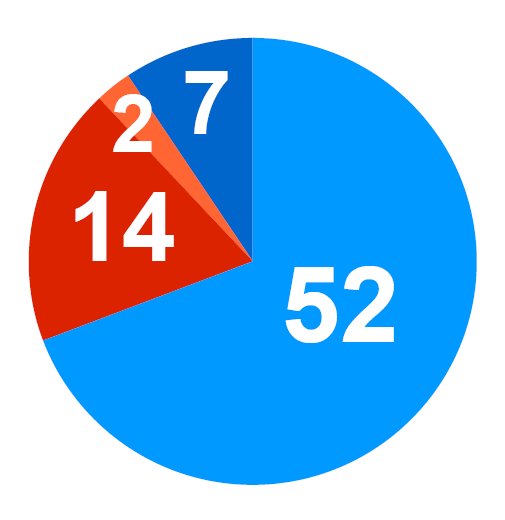
The most recent poll results indicate that if a federal election were to take place today the Bloc would win 52 seats while the Liberals would take 14 and the Conservatives would keep 7. The NDP would win 2.

And so,  Quebeckers can look forward to more of the same.

While the Bloc blusters on and Quebec voters continue to live the fantasy that the party is actually relevant,  I am reminded of poor Macbeth who realizes the futility of his situation;

".....full of sound and fury Signifying nothing." — Macbeth 

Monday, April 19, 2010

Quebec's "SPEAK WHITE" Fantasy

I read yet another tedious story by a blogger complaining that his mother was subjected to an unacceptable ENGLISH assault while lying dying in the Montreal General Hospital. To make matters worse, her medical records were in English! HORRORS!

Another complained that his doctor in a Dollard des Ormeaux clinic refused to speak to him in French as well. All these stories have a common thread running through them, one that portrays Anglo doctors as not only unable or unwilling to communicate in French, but acting arrogantly and rudely in the process. Its amazing how entrenched this urban myth has become.

The stories are all fit neatly into a fantasy created by language militants whose agenda is to cast Anglophones into that neatly preconceived notion of 'oppressors.' Most of them wish to recreate the good old days of English domination and continue to invoke the name of Lord Durham at every chance to characterize modern Anglophone attitudes.

The stories are of course impossible to prove or disprove, like the infamous story of sales clerks in the old Eaton's department store who abused Francophones by telling them to speak English. The poem "SPEAK WHITE"  entrenched the idea of English language oppression and has given birth to a whole genre of creative writing based on this dubious urban legend.

This has led to many cases of  French language crusaders 'looking' for fights by trolling through Anglo districts hoping to find that English only sign or that English speaking employee, so that they can ramp up their infernal complaint meter.

Years ago my wife was berated by a train ticket agent who informed her that there was no such place as "TWO MOUNTAINS" and told her to refer to the town by its proper name- "DEUX MONTAGNES."

Language lessons from a ticket agent? I bet he didn't finish high school. I wonder when he sells a ticket to Boston whether he refers to the country south of Montreal as the "ETATS UNIS" or  the "UNITED STATES." As they say in French "Deux poids, deux mesures" (a double standard.)

I take these "SPEAK WHITE" stories with a grain of salt. One of the most hilarious fabrications that I read this year was that of a man who confronted a Hasid (ultra-religious Jew) in Outremont over the former's  request for directions in English. According to the story, the Hasid launched into a verbal attack and even told the intrepid French language defender to "Fuck Off!" Anybody who has the slightest of knowledge of Hasids knows that the story could never have happened. A Hasid seeking a confrontation over language is just about the most ridiculous thing I've heard of. A Hasid seeking directions from a stranger? Never, that's what cell phones are for. A Hasid swearing, not a chance. But it's an entertaining story anyways.  LINK

One of our readers,"Mitch" sent me a Montreal Gazette article  entitled "French exam keeps doctor out of Pierrefonds clinic" detailing the story of a GP kept from practicing because he failed his mandatory French exam.
All members of professionals orders in Quebec are required by law to speak French before being licensed. Foreigners are required to pass a written and oral test. (Anglos who graduated high school in Quebec are not required to undergo testing, the assumption being that after eleven years of French classes, they are bilingual.)

Another story, this time in the McGill Tribune details the plight of a newly minted dentist, an American who graduated from McGill and wished to practice in Montreal. Because of another failed French exam, she was refused a permit and is forced to work in Plattsburgh, New York... Another win/win situation for Quebec.

A lot of doctors taking the test, complain that the written portion is completely unfair. One said that the test required him to write a business letter, terminating someone's employment in French, something completely unrelated to their profession. Given the average pass/rate fail in Quebec French universities for the written French exam is only 50%, is it any wonder that the doctors do so poorly?

Keeping doctors from practicing, especially desperately needed family doctors, is the height of folly.

Surely the government could find a compromise. I'd suggest that a doctor unable to pass the French test be given a provisionary license which would provide for mandatory weekly French classes. If after a year the doctor is still unable to pass, then perhaps he or she could be subject to a sliding deduction of salary with continuing classes mandatory.

Doctors are certainly not dumb. They have studied thousands of hours to get their diplomas and are high achievers. If they need a little time to learn French on the job they should be provided the opportunity without penalizing patients desperately seeking a family doctor.

Since the government cannot provide enough French speaking doctors, patients who have no family doctor should be afforded the option to choose between having a doctor who speaks French poorly or having no doctor at all.

Sometimes compromising your ideals is necessary to survive, but it seems that language militants prefer to have no doctor, rather than an English-speaking doctor.
After all principles are principles!